
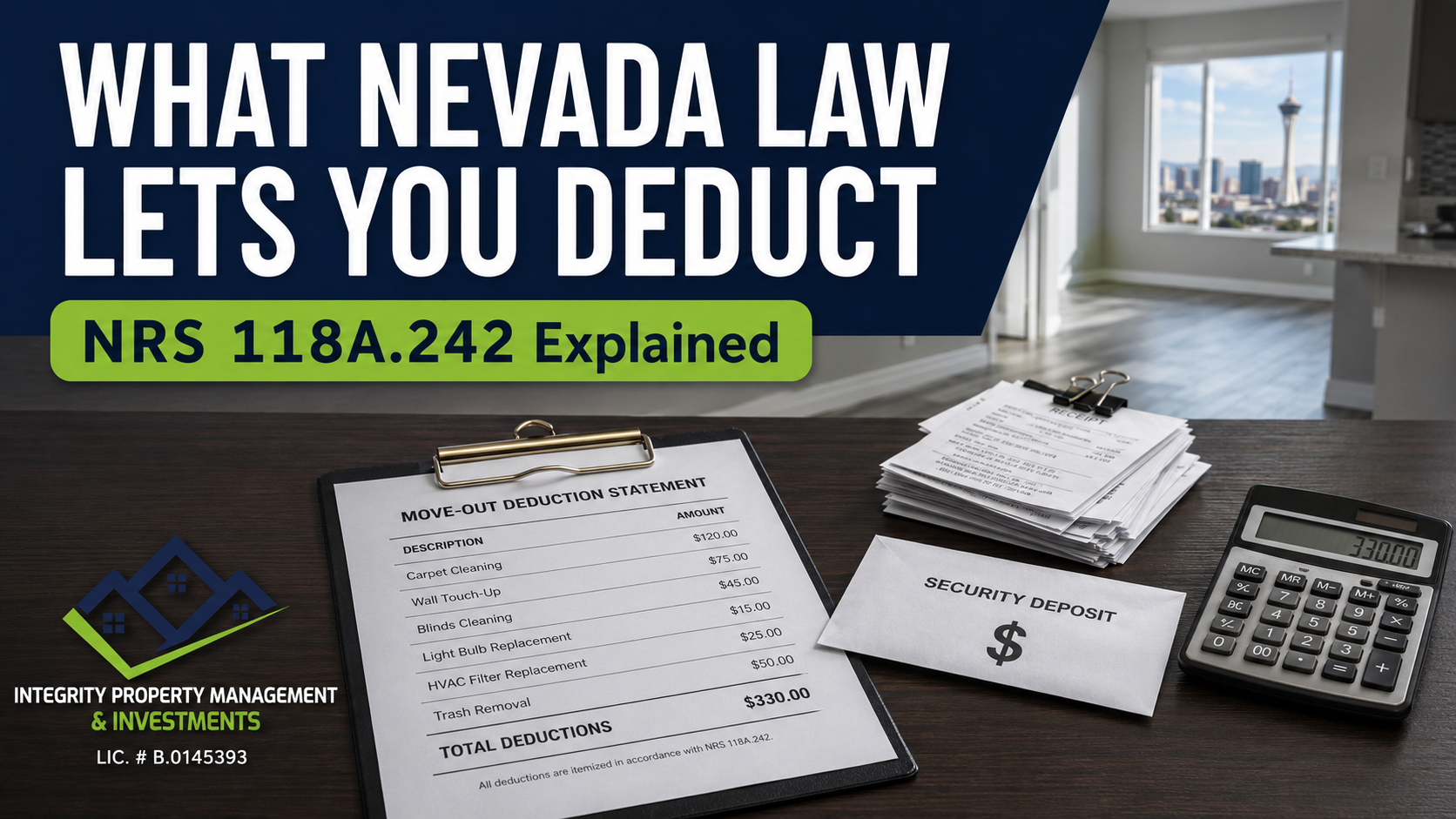
The tenant moved out three days ago. You've walked the unit, you've got a list of what needs fixing before the next lease starts, and you're doing the math on what comes out of the deposit and what comes out of your pocket.
This is where a lot of Las Vegas landlords get it wrong. Not because they're trying to cut corners, but because Nevada's rules on security deposits are specific, and getting them wrong is expensive enough to erase whatever you thought you were saving.
Here's what the law actually says.
How Much You're Allowed to Collect in the First Place
Under NRS 118A.242, the total of everything you collect as security, whether you call it a security deposit, a pet deposit, a cleaning fee, or last month's rent, cannot exceed three months of the periodic rent, combined.
That cap applies to the total, not to each fee separately. Labeling a charge differently doesn't create room outside the cap. If your monthly rent is $2,000, the most you can hold across every deposit and prepayment combined is $6,000.
Nevada law also allows a tenant to offer a surety bond in place of a cash deposit, or a combination of the two, as long as the combined value still stays under the three-month cap. It's not common in the Las Vegas market, but it's worth knowing before a tenant brings it up and you're caught off guard.
The 30-Day Clock Starts When the Tenant Is Out, Not When You Get to It
Once the tenancy ends, you have 30 days to return whatever remains of the deposit along with a written, itemized accounting of any deductions. That clock starts at move-out, not whenever your schedule allows for a walkthrough.
The itemized statement has to reach the tenant, either handed to them personally at the place rent is normally paid, or mailed to their current address or last known address if you don't have a current one.
What You Can Actually Deduct
Nevada law is specific about what a security deposit can cover:
- Unpaid rent owed through the end of the tenancy
- Damage beyond normal wear and tear, meaning something the tenant caused, not something that happens from ordinary living
- Cleaning necessary to return the unit to its move-in condition, not an upgrade or deep clean beyond that baseline
- Unpaid utility charges the tenant was contractually responsible for paying directly
Every deduction needs a dollar figure attached to an actual cost, not a flat estimate.
What Normal Wear and Tear Actually Means
This is where most disputes start, and it's also where most landlords lose if it goes to court. Wear and tear is not damage. Nevada law and the courts consistently treat these as non-deductible:
- Worn or faded carpet from years of ordinary foot traffic
- Small nail or picture-hook holes in the walls
- Faded paint or light scuffing from normal use
- Loose door handles or worn caulking that comes from age, not misuse
If a reasonable person would expect it after a multi-year tenancy, it's wear and tear, and it comes out of your maintenance budget, not the tenant's deposit.
The Itemized Statement Isn't Optional Paperwork
If you fail to return the remaining deposit within the 30-day window, or you skip the written itemized accounting, the exposure is real. Under NRS 118A.242, a landlord who doesn't comply can be held liable for the entire security deposit, plus an additional amount up to that same value in damages set by the court. A dispute over a few hundred dollars in deductions can turn into owing several times that amount.
Mistakes That Cost Landlords in Court
Deducting for wear and tear anyway. Charging for worn carpet or minor scuffing because it's easier than eating the cost yourself is one of the fastest ways to lose a deposit dispute outright.
Missing the 30-day window. Even a fully justified set of deductions doesn't protect you if the accounting arrives on day 35. The clock doesn't pause for a busy turnover season.
Sending a vague accounting instead of an itemized one. "Cleaning and repairs, $450" is not an itemized statement. Each deduction needs its own line and its own cost.
Structuring fees to get around the cap. Calling something a "move-out fee" or an "administrative fee" separate from the deposit doesn't exempt it from the three-month combined limit if it functions as security.
When a PM Makes the Difference
This is exactly the kind of rule that reads simply and gets complicated fast, especially with a full turnover schedule across a portfolio and tenants who know their rights. We document every unit with a detailed move-in and move-out inspection, so when a lease ends in Henderson or a tenant vacates in Summerlin, the accounting isn't a guess. It's backed by photos and a clear before-and-after record.
That documentation protects the owner from an unfair dispute and protects the tenant from an unfair deduction, which is exactly how it should work.
If you're not confident your current process would hold up if a former tenant pushed back, or you want a system in place before your next turnover, we're happy to walk through exactly how we handle it.